

Telling stories in visuals.
Always a Little Red hat.
Telling stories in visuals.
Always a Little Red hat.
The first chronicle 11/30/2025
Salem, into
the Holidays
Salem is a town most people arrive at already knowing the ending. It has always been a favorite place of mine.
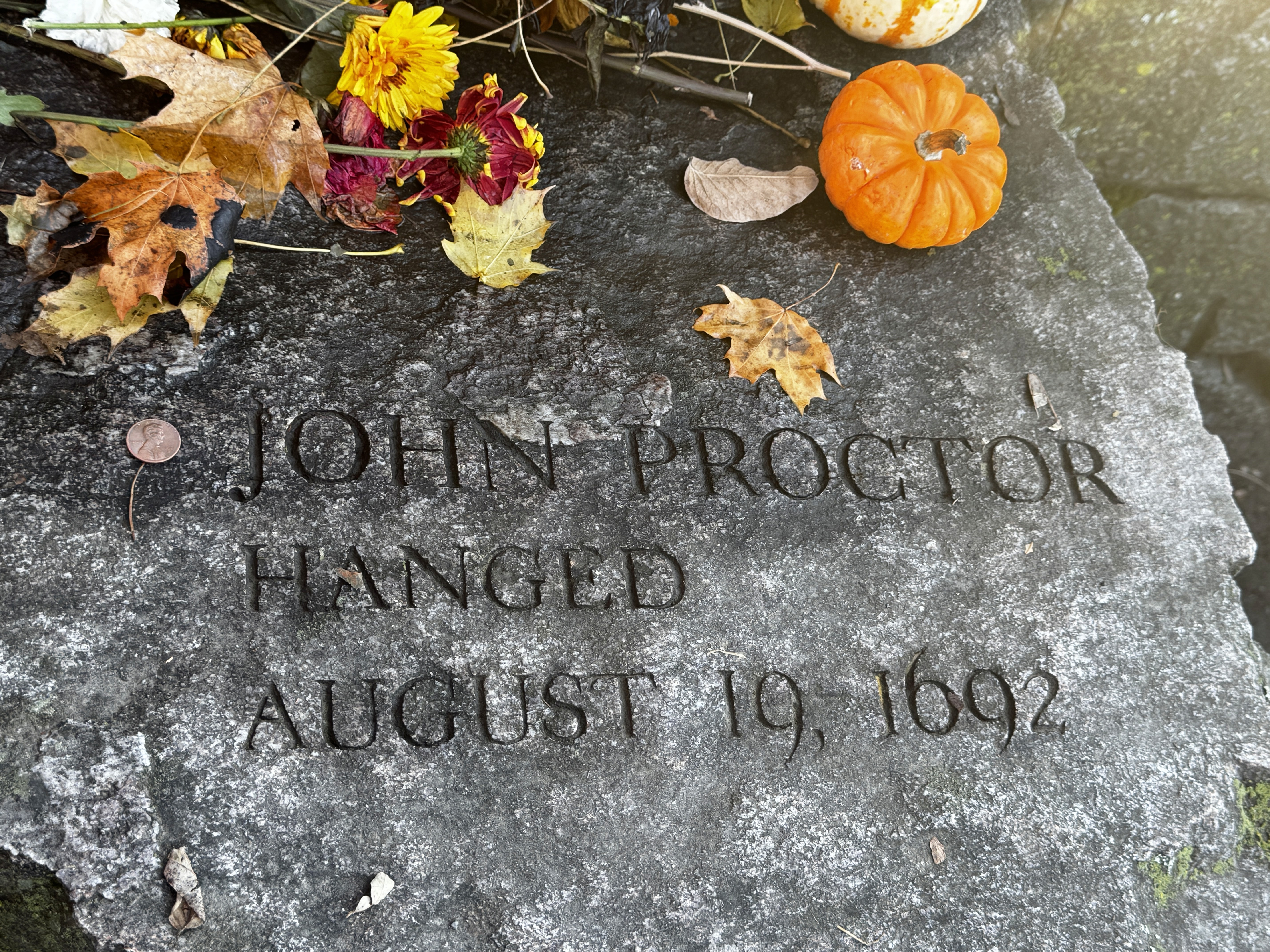
The story they expect is tragedy, spectacle, fear, accusation, a place frozen in history and retold the same way, season after season. But when I arrived, what I saw wasn’t a town defined by what happened to it. I saw a town defined by what it chose to become. Salem remembers its history, both the good and the bad, and holds it openly rather than hiding from it.
This was the first time I photographed this way, not chasing landmarks, not looking for the obvious, but watching how people moved through a place and what that revealed about it. At the time, I didn’t yet have language for what I was doing. I only knew I wanted to slow down and pay attention.
History, Held,
Not Hidden
Salem has every reason to be hardened by its past. Instead, it has learned how to hold history without letting it calcify.
Rather than erase what happened, the city acknowledges it and then actively pushes against the idea that difference should ever again be punished. What once centered fear now makes space for acceptance, expression, and community. The transformation isn’t loud. It’s lived.
That contrast, between what Salem endured and how it chose to evolve, stayed with me as I walked.
A photograph, to me, has never been just a captured image. It’s an emotional record. A moment held long enough to say something true. Salem was the first place where I understood that clearly.
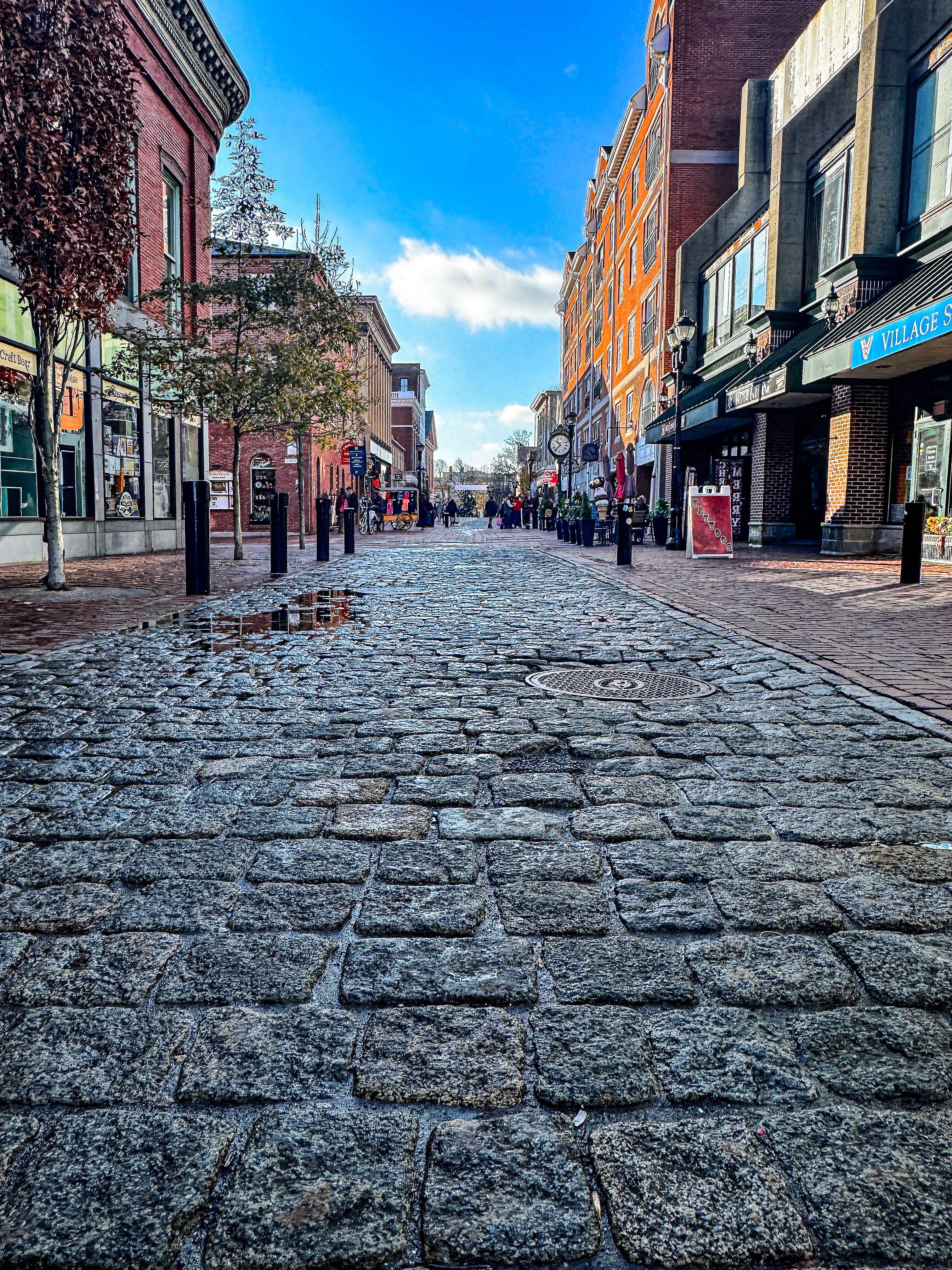
With fewer visitors, other realities surfaced.

The Season
No One Sees
I visited during the off‑season, when foot traffic thins and the theatrical version of Salem retreats.
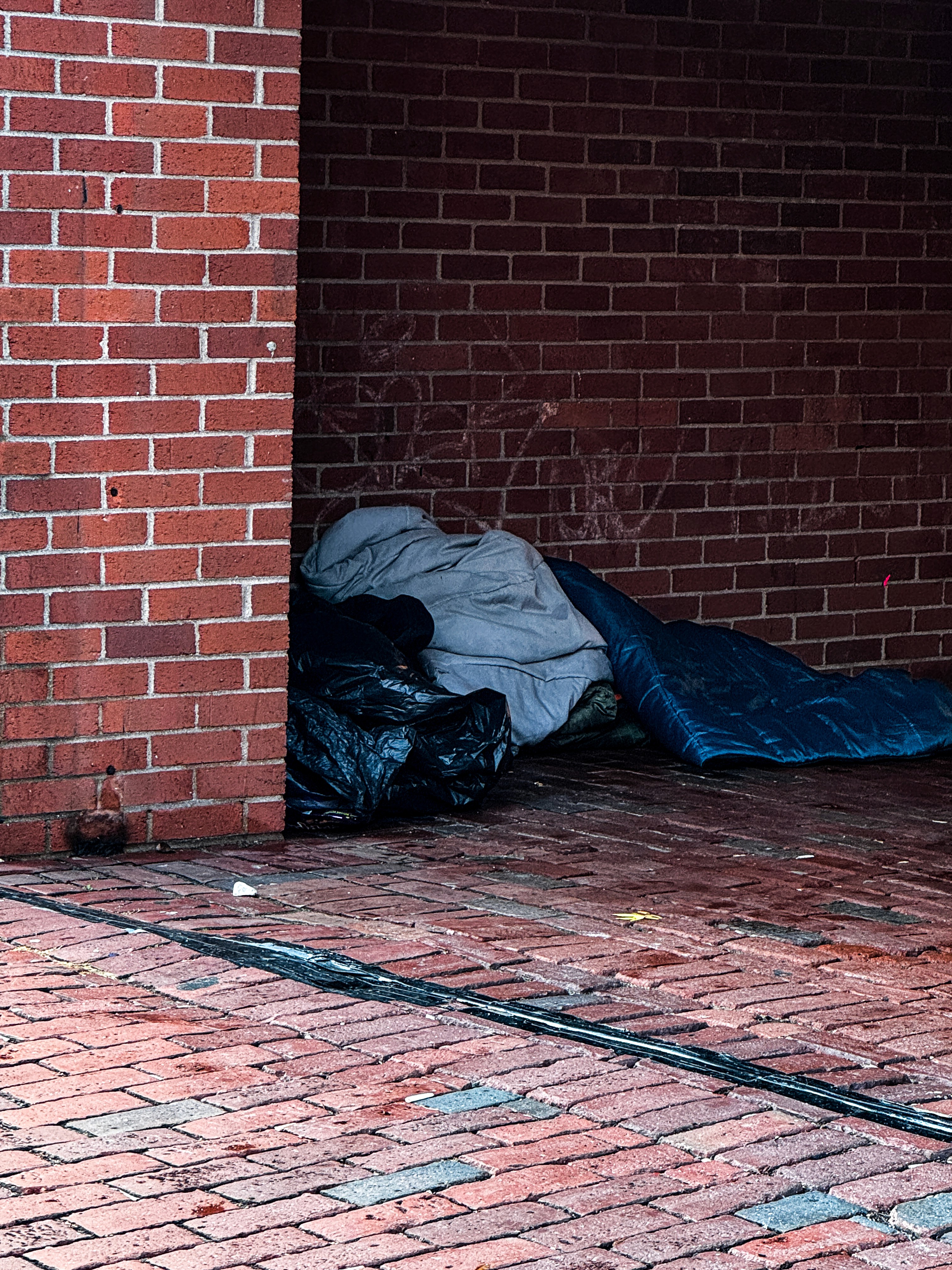
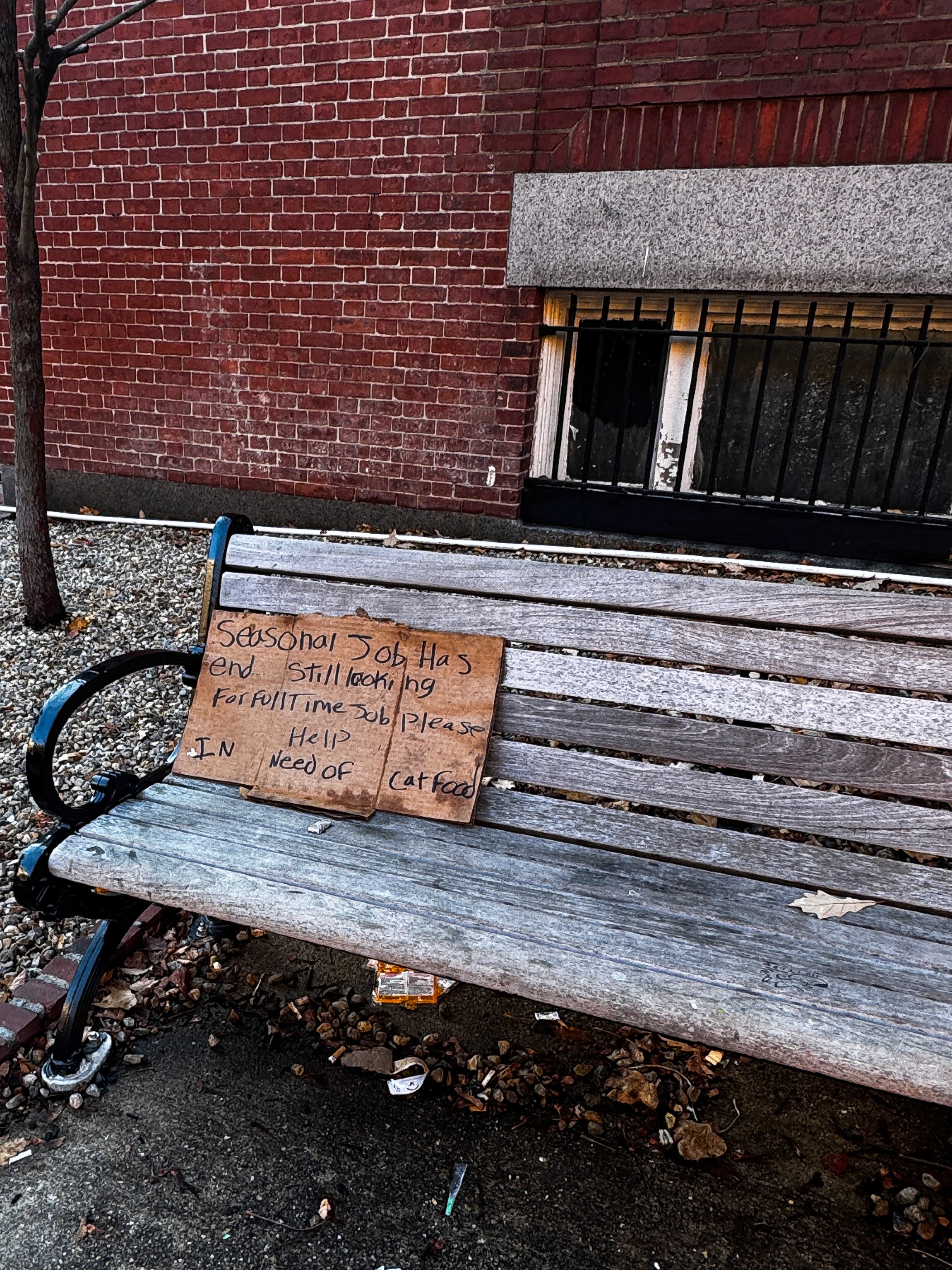
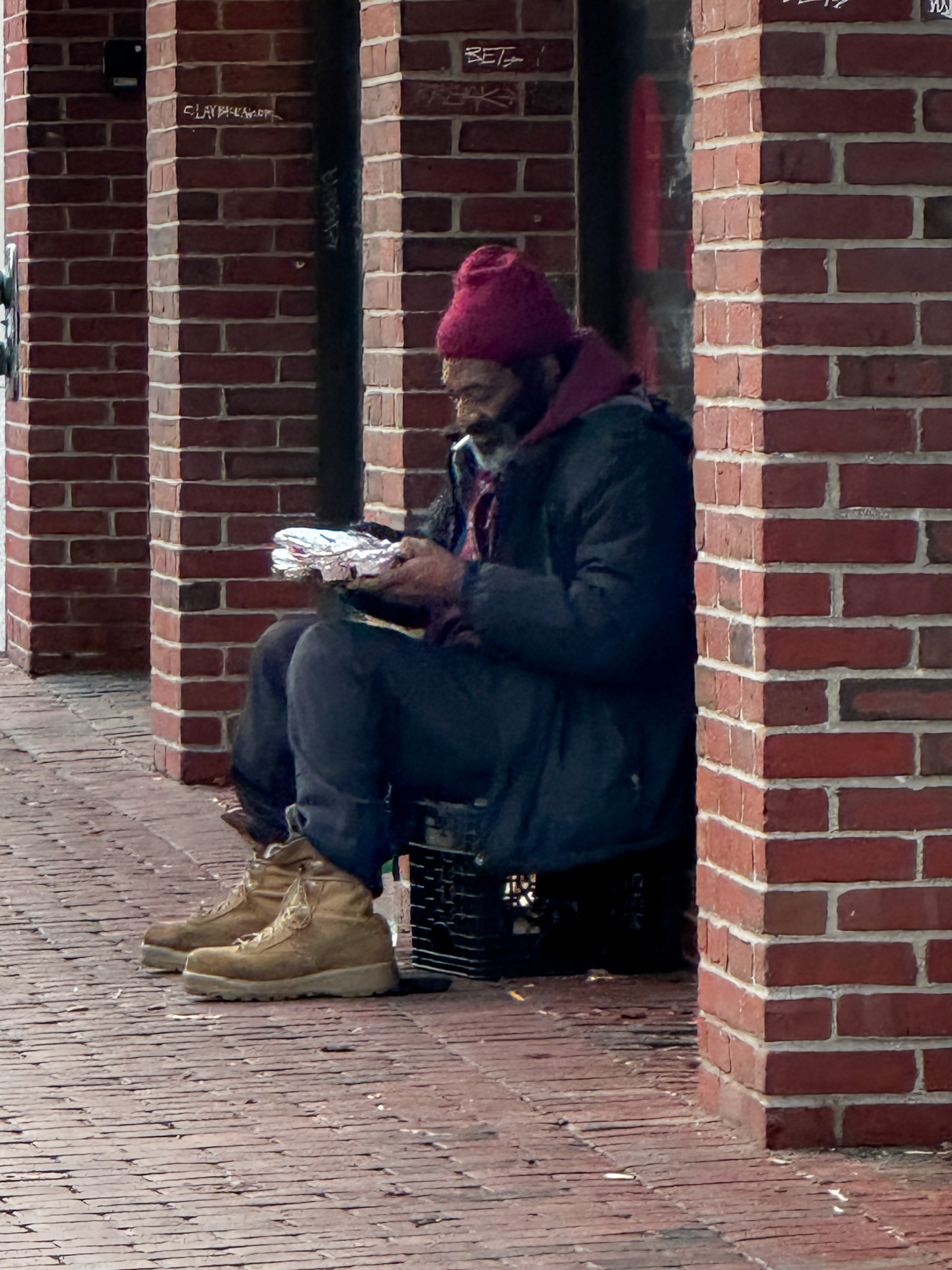
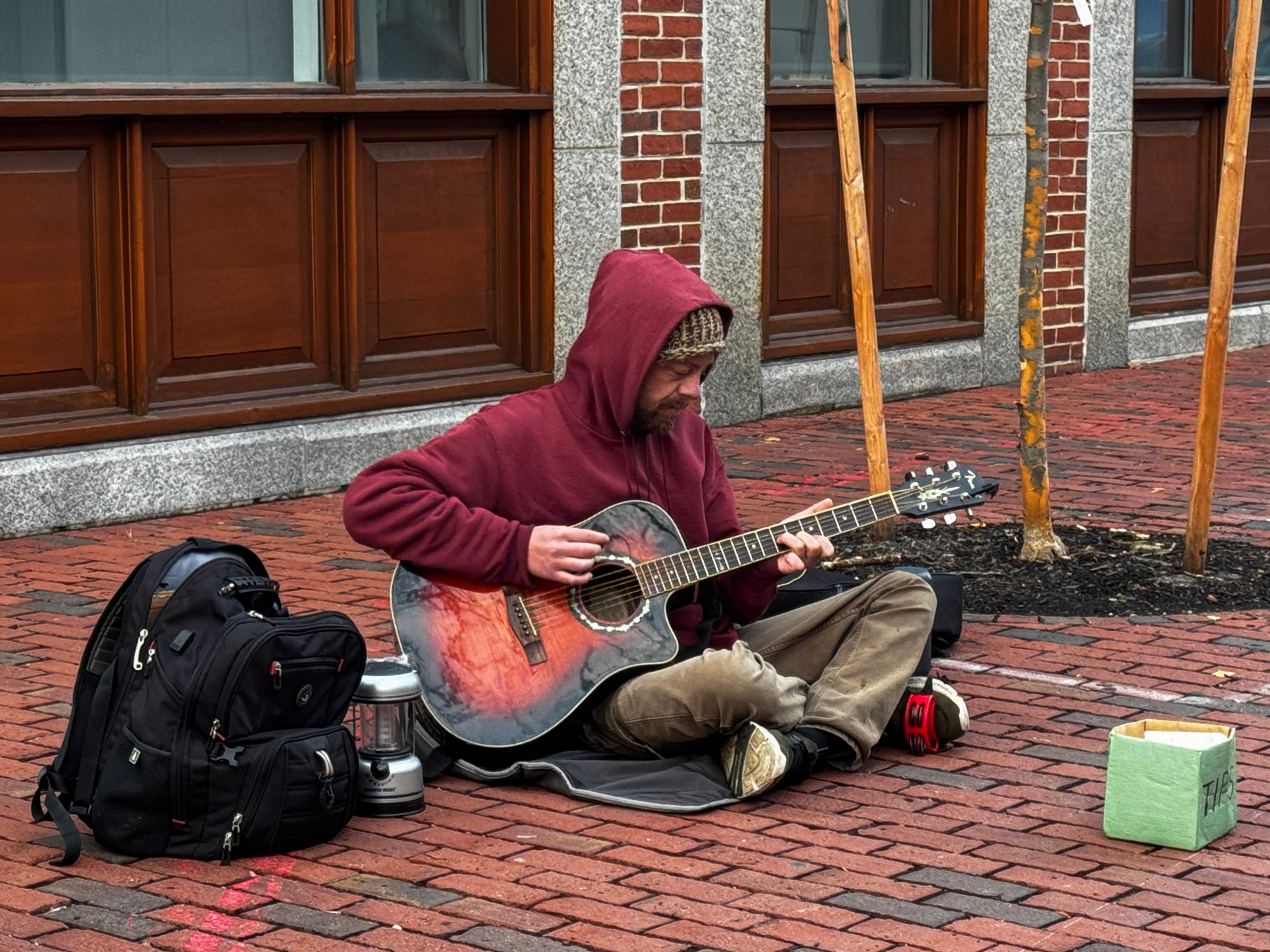
Homelessness was more visible, people sleeping in alcoves, evidence of makeshift shelters tucked against buildings, someone asleep in the middle of Salem Common, not a block from the Hawthorne Hotel. Many of the displaced were still working the streets, quietly offering what they could in exchange for tips.
At the same time, generosity appeared in small, human ways. I watched a couple hand out large, carefully wrapped sandwiches to people throughout town, not as a gesture for attention, but as a practiced routine.
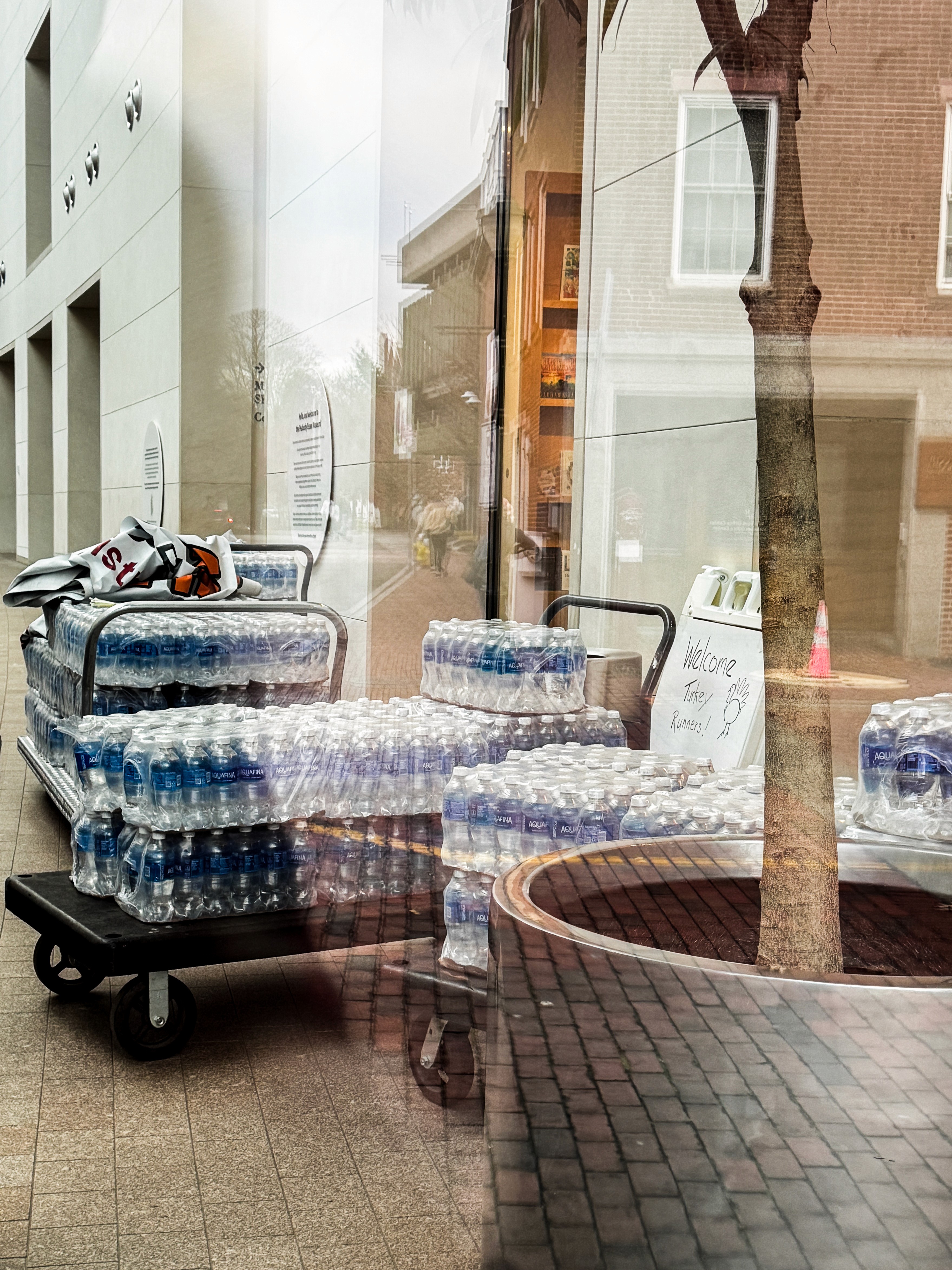
Museum doors were locked for the season, but through the glass I could see pallets of bottled water staged for Turkey Runners and food bank distribution. Even when the city slowed, care was still moving through it.
Parallel Realities
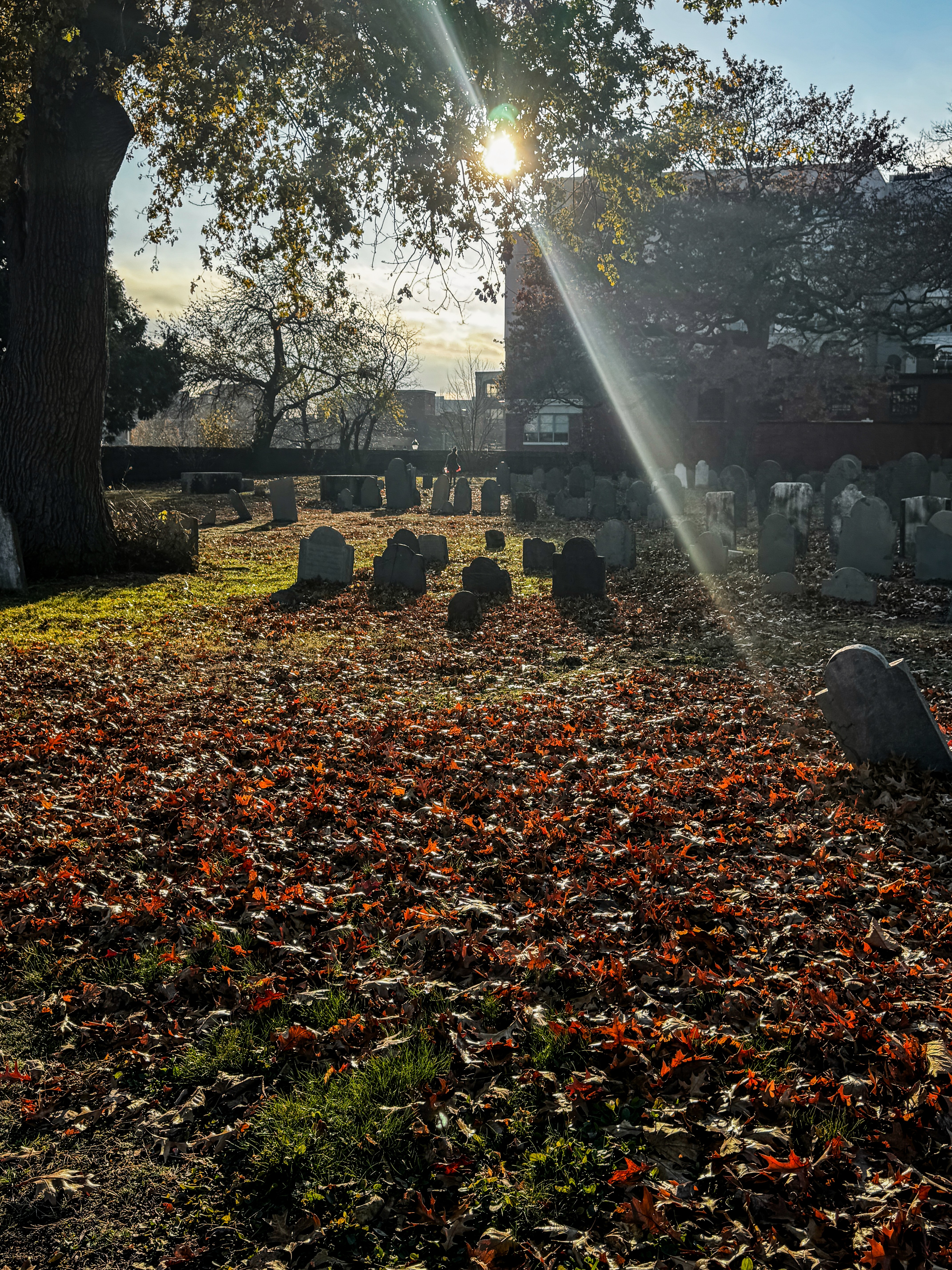
Visitors were still there, taking tours, browsing the shops that remained open, photographing the landmarks they came to see. At the same time, many businesses were closed for the season, their windows dark or quiet.
Life in Salem continued on two tracks at once. Tourism carried on, while daily realities unfolded just a few steps away. Neither experience canceled out the other. The artistry of the town did not disappear with the season. Creativity remained present in window displays, handmade signage, murals, and quiet details that felt less performative and more personal once the crowds thinned.
It was this proximity, comfort, and struggle existing side by side, history meeting the present, that stayed with me. That tension, and the way the city holds it without looking away, became the heart of this chronicle.
The Beginning
of Little Red Hat Chronicles
This piece began years ago as field notes and photographs, back when I was still learning how to document community rather than scenery. It was the first time I understood that storytelling didn’t require answers, only attention.
Little Red Hat started here.
Not as a persona, but as a way of moving through the world: observing, listening, noticing what’s easy to miss, and honoring it without spectacle.
Salem didn’t just become my first chronicle. It became the reason the chronicles exist at all.
This is where I learned how to see. There is something undeniably magical in the way Salem feels to me every time I return.

Salem, into the Holidays
A photograph, to me, has never been just a captured image. It’s an emotional record. A moment held long enough to say something true. Salem was the first place where I understood that clearly.
The Season No One Sees
I visited during the off‑season, when foot traffic thins and the theatrical version of Salem retreats.
Homelessness was more visible, people sleeping in alcoves, evidence of makeshift shelters tucked against buildings, someone asleep in the middle of Salem Common, not a block from the Hawthorne Hotel. Many of the displaced were still working the streets, quietly offering what they could in exchange for tips.
At the same time, generosity appeared in small, human ways. I watched a couple hand out large, carefully wrapped sandwiches to people throughout town, not as a gesture for attention, but as a practiced routine.
Museum doors were locked for the season, but through the glass I could see pallets of bottled water staged for Turkey Runners and food bank distribution. Even when the city slowed, care was still moving through it.
History, Held, Not Hidden
Salem has every reason to be hardened by its past. Instead, it has learned how to hold history without letting it calcify.
Rather than erase what happened, the city acknowledges it and then actively pushes against the idea that difference should ever again be punished. What once centered fear now makes space for acceptance, expression, and community. The transformation isn’t loud. It’s lived.
That contrast, between what Salem endured and how it chose to evolve, stayed with me as I walked.
Salem is a town most people arrive at already knowing the ending. It has always been a favorite place of mine.
The story they expect is tragedy, spectacle, fear, accusation, a place frozen in history and retold the same way, season after season. But when I arrived, what I saw wasn’t a town defined by what happened to it. I saw a town defined by what it chose to become. Salem remembers its history, both the good and the bad, and holds it openly rather than hiding from it.
This was the first time I photographed this way, not chasing landmarks, not looking for the obvious, but watching how people moved through a place and what that revealed about it. At the time, I didn’t yet have language for what I was doing. I only knew I wanted to slow down and pay attention.
Parallel Realities
Visitors were still there, taking tours, browsing the shops that remained open, photographing the landmarks they came to see. At the same time, many businesses were closed for the season, their windows dark or quiet.
Life in Salem continued on two tracks at once. Tourism carried on, while daily realities unfolded just a few steps away. Neither experience canceled out the other. The artistry of the town did not disappear with the season. Creativity remained present in window displays, handmade signage, murals, and quiet details that felt less performative and more personal once the crowds thinned.
It was this proximity, comfort, and struggle existing side by side, history meeting the present, that stayed with me. That tension, and the way the city holds it without looking away, became the heart of this chronicle.
With fewer visitors, other realities surfaced.
The Beginning of Little Red Hat Chronicles
This piece began years ago as field notes and photographs, back when I was still learning how to document community rather than scenery. It was the first time I understood that storytelling didn’t require answers, only attention.
Little Red Hat started here.
Not as a persona, but as a way of moving through the world: observing, listening, noticing what’s easy to miss, and honoring it without spectacle.
Salem didn’t just become my first chronicle. It became the reason the chronicles exist at all.
This is where I learned how to see. There is something undeniably magical in the way Salem feels to me every time I return.